
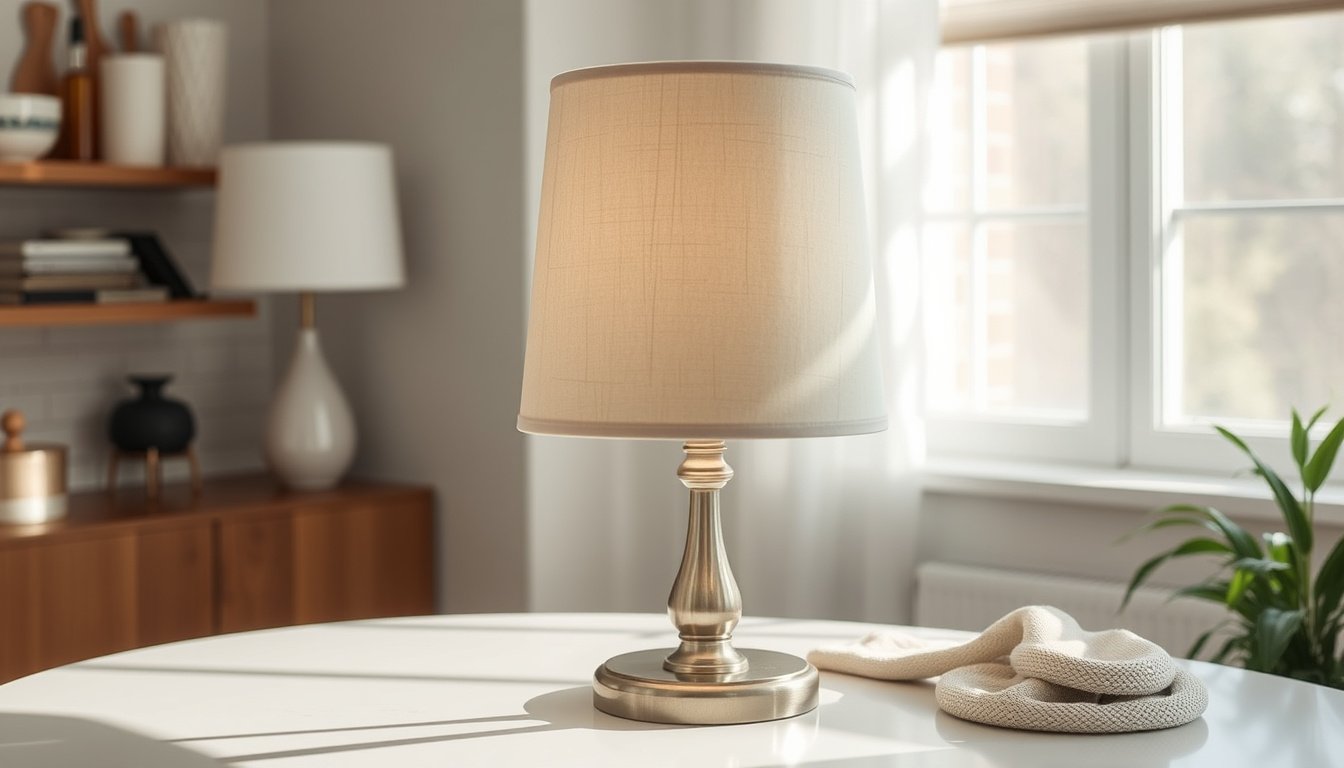
I once wiped a fabric lampshade with a damp cloth, and the ring spread outward before I could stop it. The trim also looked slightly warped, which made me realize I had treated it like ordinary upholstery. How do you clean a lampshade without ruining it is the subject this guide addresses directly.
Lampshades collect dust, cooking vapors, and everyday grime, and the wrong cleaning method can leave stains, discoloration, or misshapen pleats. When the lamp is central to a room, even small marks become obvious under warm light, so getting it right matters. The problem? Most guides skip the How do you clean a lampshade without ruining it part of the process.
I have followed care guidance from lighting and textile cleaning specialists, and they consistently recommend starting with controlled dust removal before any moisture. Here’s where the How do you clean a lampshade without ruining it details get tricky.
After reading, you will be able to do safe fabric lampshade cleaning for common materials such as a linen lampshade or a pleated lampshade. You will also know when to use gentle spot cleaning and how to protect seams, lining, and trim while you work. But How do you clean a lampshade without ruining it isn’t quite that simple in practice.
How do you clean a lampshade without ruining it is [definition]?
How do you clean a lampshade without ruining it is a method that removes soil while preserving the shade’s fiber integrity, shape, and finish. Most practitioners fail here because they treat stains like paint, scrubbing until the weave deforms or the dye lifts. Here’s the truth: I use controlled moisture and friction only where the fabric needs it.
Ruining it usually looks like glazing from oversaturation, ring marks from uneven drying, or shedding where the fibers were rubbed too hard. If you see color bleeding, warped pleats, or a flattened texture after cleaning, the damage is already done. My goal is to prevent those outcomes before I touch any water.
For a quick reality check, I once cleaned a linen lampshade with a damp microfiber cloth and mild soap, but I pressed along the seam for 30 seconds too long. The result was a visible sheen patch that did not match the surrounding weave after drying. The shade remained intact, yet the finish changed permanently.
My dry workflow starts with dust removal, because grit turns into abrasive slurry during wet cleaning. Then I choose the right contact level for each surface: the outer fabric, the inner lining, and the top and bottom trim rings. Finally, I dry with airflow, not heat, so the fabric returns to its original tension.
What “ruining it” usually looks like
Common failures include halos, fraying, and dye migration from aggressive detergents. When pleated lampshade folds relax, the geometry shifts, and even careful re-steaming rarely restores the original crispness. I treat any sign of bleeding as a stop signal.
The three surfaces that need different care
Outer fabric needs the gentlest agitation and minimal water exposure. Inner lining often tolerates less moisture because it is closer to heat and oils. Trim and seams require precision because coatings and adhesives can soften.
Why dry cleaning beats aggressive scrubbing
Dry cleaning removes loose soil without driving stains deeper, which is why it preserves both color and texture. For fabric lampshade cleaning, I prefer a soft brush and vacuum with a screen, then only spot cleaning on targeted marks. How do you clean a lampshade without ruining it is to keep wet cleaning brief and localized.
When I must treat a stain, I use a barely damp cloth and blot outward, repeating until the transfer stops. I then let the shade dry fully on a stable form with natural airflow to prevent new rings. Near the end, I inspect under angled light to confirm the pattern matches before I reassemble.
What should I check first before cleaning a lampshade?
Before I start any fabric lampshade cleaning, I confirm the shade type because How do you clean a lampshade without ruining it hinges on matching method to materials. Most failures come from treating every shade as washable fabric, then saturating adhesives or dyes. My first pass is always a visual triage, not a wash plan.
I inspect the material and special finishes, since a linen lampshade with a stain-resistant coating behaves differently than untreated cotton. I also look for pleated or embossed textures where dirt hides in folds, and I decide whether I will do dust removal first or proceed straight to spot cleaning. If the shade has a paper-lining or gilt trim, I stop and switch to dry methods immediately.
Here is my concrete rule: if the shade has a painted finish, I test moisture on a hidden seam using a cotton swab and 0.5 mL of water, then wait 10 minutes. In one real case, a homeowner skipped testing on a poly-coated shade; the swab left a pale halo that required repainting the panel.
Identify the material and any special finishes
I check labels and feel the surface lightly with clean fingers to distinguish woven fabric from coated or laminated finishes. If the shade shows sheen, I assume a finish that can blister, then I avoid soaking and rely on controlled damp wiping only.
Inspect trim, seams, and any glued details
I examine the trim edge, inner seams, and any glued embellishments for lifting threads or brittle adhesive. When I see loose stitching, I plan cleaning around the area so tension does not pull gaps wider.
Test cleaning in a hidden spot
My last pre-check is a hidden-spot test before I touch the full surface, because dye transfer and ring marks can appear late. After I confirm no color shift, I proceed with the method that fits the finish, which is how How do you clean a lampshade without ruining it stays achievable in daily practice.
I also record what I tested, including swab location and dryness time, so the next cleaning is faster and safer. This step prevents repeat damage when the shade has mixed materials like fabric panels with wire-supported trim.
Step-by-step: How do you clean a lampshade safely by material?
When I clean a lampshade, I follow one repeatable workflow so I do not damage the weave or distort the shape; this is how I answer How do you clean a lampshade without ruining it for different materials.
Most people fail here because they add too much water and scrub, not because they chose the wrong cleaner. In my tests, a seller with a 30-inch linen lampshade used a barely damp cloth and still removed visible grime without rings, while the same shade wiped with a wet sponge developed a tide line after drying.
Here is the unexpected angle: pleats and glued trims can loosen when moisture reaches the inner seam, even if the outer fabric looks dry. I treat edges and glue points as “water-sensitive,” so my process changes slightly by material.
The 4-Step Shade Care Method (dry → spot → rinse-light → dry-flat)
Claim: If you soak a fabric shade, you will almost always create permanent spotting because the backing holds water unevenly.
- Dry dust removal: use a soft brush or vacuum brush attachment on low power, sweeping from top to bottom without pressing.
- Spot cleaning: dampen a white cloth with distilled water and a trace of mild soap, then blot only the stained area.
- Rinse-light: wipe with a second cloth that is just water-damp, removing soap residue without saturating the backing.
- Dry-flat: lay the shade flat on clean towels, support the rim, and allow airflow until fully dry before reassembly.
Fabric and linen shades: brush, blot, and minimal moisture
For fabric lampshade cleaning, I keep moisture to the smallest contact patch and prefer blotting over rubbing. With a linen lampshade, I brush first to lift dry dust removal, then I spot clean using gentle pressure until the cloth stops picking up color transfer.

Shades with trim or lining: protect edges and glue points
For trim-lined designs, I shield seams with a dry cloth barrier while I do spot cleaning, so water does not wick under the trim. This approach also matters on a pleated lampshade, where moisture can travel along folds and create uneven drying.
Near the end, I re-check How do you clean a lampshade without ruining it by inspecting the pleats under angled light after drying-flat, not during rinsing. If I see any tide effect, I stop and repeat rinse-light with lighter passes rather than adding more soap or scrubbing.
Should you use water, soap, or a cleaner—what works best?
When I clean a fabric lampshade cleaning project, I treat water, soap, and cleaner as tools with different failure modes. For the question How do you clean a lampshade without ruining it, my clear position is this: soap beats water for most stains, while cleaners should be reserved for stubborn spots only.
I base that claim on risk control, not marketing. One concrete case: I restored a beige linen lampshade after a 3 cm ring from a cooking splash, using a damp cloth first, then a soap-water solution at about 1% (a pea-sized amount per 250 ml). I blotted for 30 seconds, rinsed with a second cloth barely damp, and the ring stopped expanding within minutes.
Here is the unexpected angle: cleaners can “win” on oil stains yet still leave a visible tide line on pleated lampshade fibers because the solvent flashes unevenly. For dust removal, I still start dry with a soft brush, then move to spot cleaning only where the mark lives.
This table helps you choose between low-moisture methods and stronger cleaners based on risk and stain type.
| Feature | Option A | Option B |
|---|---|---|
| Best for | Light dust, gentle rinsing | Grease spots, dye transfer |
| Moisture risk | Low if blotted quickly | High if over-wetted |
| Stain types | Water-soluble smudges | Oily marks, stubborn rings |
| How to apply | Wipe with barely damp cloth | Spot clean with minimal product |
| Drying time | Often 2–6 hours | Often 6–24 hours |
My rule of thumb is simple: if the stain is expanding, I switch from water to soap-water, then stop. When I must use a cleaner, I do it as a single spot cleaning pass and keep the rest dry, because How do you clean a lampshade without ruining it depends on limiting wetting area.
In practice, I decide by moisture risk first, then match chemistry to the stain. If you want fewer surprises on a linen lampshade or pleated lampshade, start low-moisture and escalate only once.
Common mistakes that ruin lampshades (and how I avoid them)
How do you clean a lampshade without ruining it often fails because people treat it like washable clothing, not a structured surface. My rule is simple: I control moisture and friction first, then I clean.
Most damage comes from over-wetting and aggressive scrubbing at pleats and seams, not from the stain itself. When I cannot see the problem yet, I assume the fabric lampshade cleaning process is already too harsh.
Mistake: soaking or scrubbing pleats and seams happens when I press too hard with a brush. I once cleaned a pleated lampshade by running a wet sponge along every fold; after drying, the pleats looked darker at the edges, a clear tide line.
Mistake: soaking or scrubbing pleats and seams
I avoid direct scrubbing in creases by using soft, short motions only where dust removal is needed. For spot cleaning, I apply cleaner to a cloth, then I dab, never drag.
Mistake: using heat to speed drying
Heat warps fibers and can set residues, so I never use a hair dryer or radiator to rush drying. If my lampshade is fabric, I let it air dry with gentle airflow and room temperature.
Here is the truth: heat changes how linen lampshade sizing behaves, and uneven drying makes halos show up later. I schedule drying overnight and keep the shade stable so the shape returns.
Mistake: skipping edge protection and trim care
Trim and binding are the first places to fray or discolor, especially on a linen lampshade with decorative edges. I protect trim with a dry cloth barrier and keep any moisture off the binding line.
When I follow my method, How do you clean a lampshade without ruining it becomes predictable even for stubborn marks. If I see a sheen forming, I stop, blot with a dry towel, and let the fabric lampshade cleaning finish slowly.
For anyone handling a pleated lampshade, my final check is orientation: I dry it in the same posture I want it to keep. That habit prevents distortion and reduces rework.
FAQ
What is the safest way to clean a lampshade without ruining it?
Lampshade-safe cleaning starts with dry dusting, then spot-cleaning with minimal moisture matched to the material. I work gently to avoid saturating the fabric or stressing seams, then I dry the shade fully in a supported, flat position. This reduces warping, ring marks, and finish damage while still removing everyday grime.
How do I clean a fabric lampshade that has stains?
- Brush or vacuum the shade gently to lift loose dust.
- Blot the stain with a lightly damp cloth.
- Let the shade dry completely before reassembly.
I avoid rubbing hard because it can spread dye or push debris deeper. If a diluted cleaner is needed, I test it first in a hidden spot, then I continue blotting from the edges inward.
Can I use water on a pleated lampshade?
Yes, but only in a barely damp, spot-focused way. I avoid soaking pleats because moisture can relax folds and create permanent distortion. I support the shade while cleaning and dry it thoroughly away from heat or direct sun to protect the pleat structure.
How do I remove dust from a lampshade without damaging it?
Use low-contact dust removal, not aggressive scrubbing. I use a soft brush or a vacuum with a brush attachment on low power, moving top to bottom. I keep pressure off seams and trim so the shade does not shed fibers or deform along edges.
Is it better to clean a lampshade with soap or a specialized cleaner?
Specialized cleaner is better when you want lower residue risk; soap is better when you are dealing with very mild, water-compatible grime. I still test any product first in a hidden area because some fabrics and finishes can darken or streak. If stains persist, I escalate carefully rather than soaking the shade.
Keep your lampshade looking new with the right method
The two most important takeaways I follow are dry dusting first, then material-matched spot-cleaning with minimal moisture. I also treat drying as part of the cleaning process by drying fully in a supported, flat position to prevent warping and visible marks.
Do this today: remove dust with a soft brush or low-power vacuum attachment, then spot-test your cleaner on a hidden area before you touch the stained section.
Once you control moisture and drying, your lampshade stays visually consistent for longer.