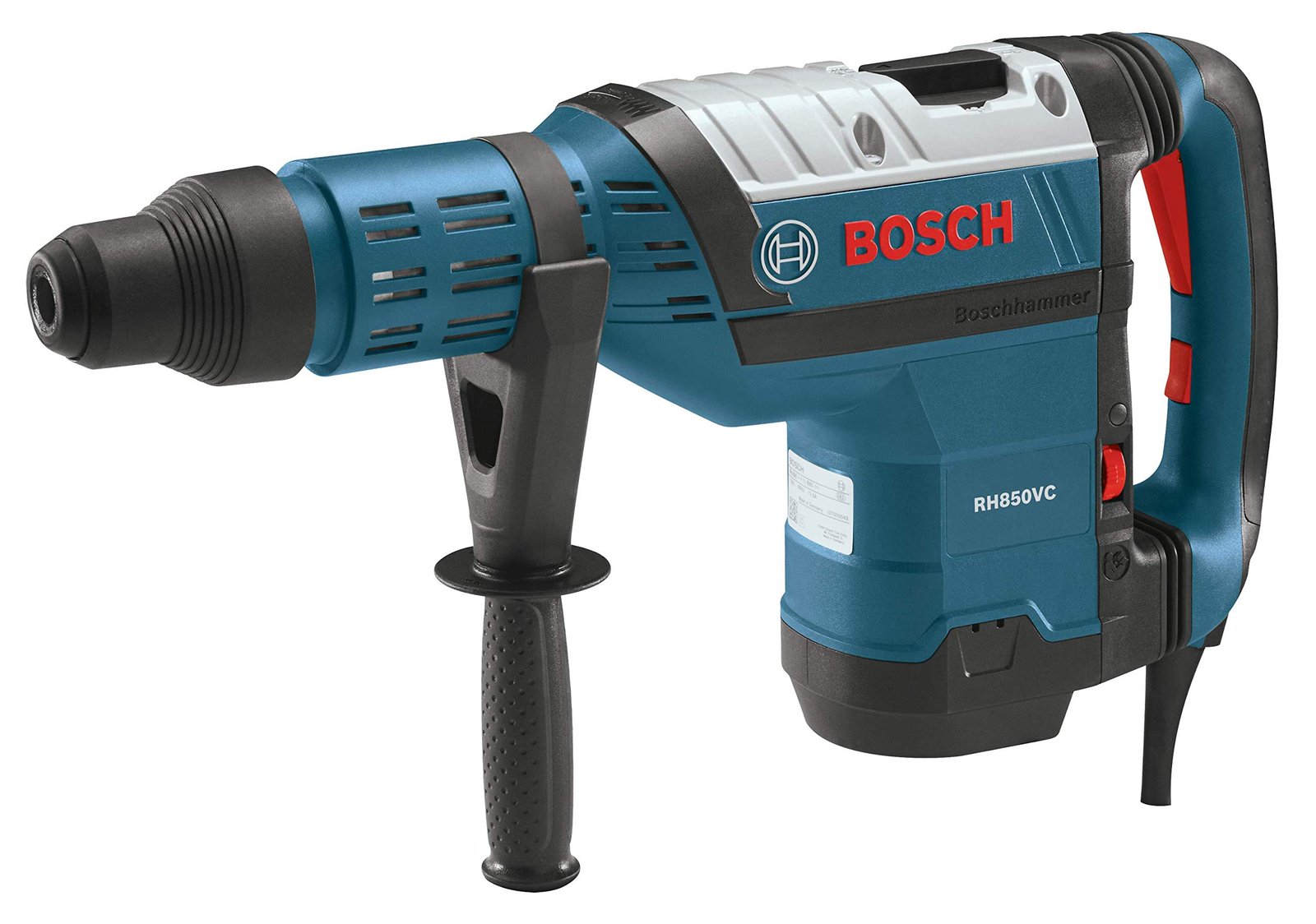
In the United States, a Bosch hammer drill usually costs about $100 to $350, depending on its power source, voltage, chuck size, and whether the package includes batteries. A basic corded model may cost near the low end, while a cordless 18V kit with a battery and charger can cost more.
A Bosch rotary hammer is a different tool. It is made for tougher concrete and masonry work and often costs $150 to more than $500.
Prices change by model, seller, promotions, and package contents. Always check the current price on the Bosch Power Tools US website and authorized US retailers before buying.

Bosch Hammer Drill Prices in the United States
The most common Bosch hammer drill prices fall into four groups:
| Bosch tool type | Typical US price range | What the price often includes |
|---|---|---|
| Corded hammer drill | $80–$170 | Tool only, side handle, depth gauge |
| 12V cordless hammer drill | $130–$250 | Tool, battery, charger, and case in some kits |
| 18V cordless hammer drill | $150–$350 | Tool only or complete kit |
| SDS rotary hammer | $150–$500+ | Tool, side handle, depth stop, and sometimes case |
| Heavy-duty rotary or demolition hammer | $400–$900+ | Tool and accessories; batteries may cost extra |
These are typical retail ranges, not guaranteed prices. A sale may reduce the cost, while a professional kit with two batteries may cost much more.
Tool-only prices versus kit prices
A Bosch cordless hammer drill sold as a bare tool does not include a battery or charger. This can make the listed price look lower than the actual cost of ownership.
For example, a hypothetical purchase may look like this:
- Bare 18V hammer drill: $179
- 18V battery: $80–$150
- Charger: $40–$100
- Total if you own no Bosch 18V tools: $299–$429
A complete kit may cost less than buying each part separately. Check the box contents before comparing prices.
Why two similar Bosch drills cost different amounts
Price often changes because of:
- Battery voltage
- Brushless or brushed motor design
- Chuck size
- Maximum drilling capacity
- Torque and speed settings
- Included battery size
- Number of batteries
- Carrying case or tool bag
- Built-in work light
- Electronic clutch or kickback control
- Whether the tool is a standard hammer drill or an SDS rotary hammer
The biggest price mistake is comparing a bare tool with a full kit. The second is comparing a hammer drill with a rotary hammer as if they were the same product.

Hammer Drill vs. Rotary Hammer: Which Bosch Tool Do You Need?
A standard Bosch hammer drill uses a regular chuck and adds a hammering action for light masonry work. A Bosch rotary hammer uses an SDS chuck and delivers a stronger impact for concrete, brick, block, and other hard materials.
Standard hammer drill
A standard hammer drill is usually the better choice for:
- Small holes in brick
- Light drilling in block
- Occasional masonry anchors
- Wood and metal drilling
- Driving screws at lower settings
- General home repair
Many models use a 1/2-inch chuck. The chuck accepts common drill bits and driver bits, so the tool can handle more than masonry work.
A hammer drill may be the right fit when you need one versatile tool for household projects. It is usually lighter and less expensive than a rotary hammer.
SDS rotary hammer
An SDS rotary hammer is built for harder and more frequent masonry work. It may offer:
- Rotary drilling
- Hammer drilling
- Chiseling on selected models
- Faster drilling in concrete
- SDS-Plus or SDS-Max bit compatibility
A rotary hammer is often a better option for:
- Concrete anchor holes
- Repeated drilling in concrete
- Removing tile or mortar
- Installing pipe or cable through masonry
- Larger holes in brick or concrete
An SDS chuck does not work like a normal keyless chuck. You need compatible SDS bits. Those bits can add to the total project cost.
Simple buying rule
Choose a standard hammer drill if you need occasional small holes in masonry and also want a general-purpose drill.
Choose an SDS rotary hammer if you will drill many holes in concrete, use large masonry bits, or need a chisel mode.
Buying a rotary hammer for small home jobs can add cost and weight without much benefit. Buying a standard hammer drill for repeated concrete work can lead to slow progress and excess wear.

What Changes the Total Cost of a Bosch Hammer Drill?
The tool price is only one part of the buying decision. Batteries, bits, storage, and replacement parts can affect the final cost.
1. Corded or cordless power
A corded Bosch hammer drill often costs less at checkout. It does not need a battery, and it can run as long as power is available.
Its limits are clear:
- You need a nearby outlet.
- An extension cord may be needed.
- The cord can restrict movement.
- Outdoor work may require a suitable, protected power source.
A cordless model costs more at first but offers easier movement. The battery platform may also save money if you already own Bosch tools that use the same battery system.
2. Battery platform
Bosch sells cordless tools in different voltage systems. A compact 12V tool may be easier to handle for light work. An 18V tool usually offers more power and a wider range of professional accessories.
Do not assume that all Bosch batteries fit all Bosch tools. Check the exact battery family and model details before purchasing.
3. Brushless motor design
Some Bosch cordless tools use brushless motors. These motors may offer improved efficiency and longer service life compared with brushed designs, but the purchase price is often higher.
Brushless does not mean that a tool is automatically right for every job. For occasional drilling, a lower-cost brushed tool may meet your needs. For frequent work, the added cost may be easier to justify.
4. Battery size and number
A kit with one compact battery may cost less than a kit with two larger batteries. A larger battery can extend working time, but it may also add weight.
Compare kits by:
- Battery voltage
- Amp-hour rating
- Number of batteries
- Charger type
- Charging time
- Tool-only versus complete kit status
5. Accessories
A drill may include a side handle and depth stop but no drill bits. Other kits may include bits, a case, or a bag.
If you need masonry bits, budget for them separately. A general-purpose bit set may not contain the right SDS or concrete bits for your project.
6. Warranty and service
Warranty coverage can vary by product type, seller, and region. Read the current Bosch US warranty terms before buying, especially for refurbished or clearance tools.
Keep your receipt and record the model number. These details can help with warranty service, replacement parts, and support.

Bosch Hammer Drill Cost by Common US Use Case
The best price depends on the work you expect to do. The cheapest tool is not always the lowest-cost choice if it cannot handle the job.
| Your project | Likely tool | Reasonable budget |
|---|---|---|
| Hang shelves on drywall and wood studs | Standard drill/driver | $70–$200 |
| Drill a few small holes in brick | Corded or cordless hammer drill | $100–$250 |
| Install masonry anchors often | 18V hammer drill or compact rotary hammer | $180–$400 |
| Drill many holes in concrete | SDS rotary hammer | $200–$500+ |
| Remove tile or chip concrete | Rotary hammer with chisel mode | $250–$700+ |
| Drill large holes for pipes or cables | Larger rotary hammer | $300–$900+ |
These budgets are planning estimates. The correct model depends on hole size, material, work frequency, and access to electricity.
Example: occasional homeowner use
Suppose you need to install four anchors in a brick wall. A standard hammer drill may be enough. A corded model could keep the initial cost low, while a cordless kit may be easier if no outlet is nearby.
For this job, spending several hundred dollars on a large SDS-Max rotary hammer would usually provide more power than needed.
Example: repeated concrete drilling
Suppose you need to drill dozens of holes in a concrete slab. A rotary hammer may cost more than a standard hammer drill, but it can make the work faster and reduce strain.
The extra cost may also be worthwhile if the tool will be used again for anchors, tile removal, or masonry installation.
Example: buying into a battery system
If you already own Bosch 18V batteries and charger, a bare hammer drill may be the most economical choice. If you own no compatible battery, compare the price of a complete kit with the price of the bare tool plus separate power equipment.

How to Find a Fair Bosch Hammer Drill Price
Use the same comparison method for every listing. This avoids confusing a low advertised price with a low total cost.
Step 1: Identify the exact tool type
Confirm whether the listing is for:
- A drill/driver
- A hammer drill
- A rotary hammer
- A demolition hammer
A drill/driver usually lacks a hammer mode. A rotary hammer uses a different chuck and bit system.
Step 2: Record the model number
Bosch product names can look similar. The model number is more reliable than a short retailer title.
Use the model number to check:
- Voltage
- Chuck type
- Maximum bit size
- Operating modes
- Included accessories
- Warranty information
- Replacement parts
Step 3: Check the package contents
Look for phrases such as:
- Tool only
- Bare tool
- Includes battery
- Includes charger
- Two-battery kit
- Includes case
- Refurbished
- Factory reconditioned
A “tool only” listing may be a good deal for an existing Bosch user but a poor deal for a first-time buyer.
Step 4: Compare the total project cost
Add the price of the tool, battery, charger, bits, and any required safety equipment.
Total cost = tool price + battery and charger cost + bit cost + required accessories
This gives a better comparison than looking at the drill price alone.
Step 5: Check seller and return terms
Buy from Bosch or a reputable authorized retailer when possible. Confirm:
- Return period
- Warranty status
- Shipping cost
- Condition of the tool
- Whether the battery is genuine and included
- Whether the seller accepts returns on used tools
Very low prices can reflect an open-box product, missing battery, older model, or unclear warranty.

Is an Expensive Bosch Hammer Drill Worth It?
A more expensive Bosch hammer drill can be worth the money when you need more power, longer runtime, better control, or regular job-site use. It may not be worth it for one small home project.
Spend more when:
- You drill concrete often.
- You need larger holes.
- You work away from outlets.
- You already use the matching Bosch battery platform.
- You need a brushless motor for regular use.
- You want a rotary hammer with a chisel function.
- Downtime would cost more than the tool upgrade.
Spend less when:
- You drill masonry only a few times per year.
- Your holes are small.
- You have access to a power outlet.
- You do not need a chisel mode.
- You already have suitable batteries.
- The tool is for light home maintenance.
Power is not the only consideration. A heavy rotary hammer may be tiring for overhead work, while a compact hammer drill may be easier to control.

Safety and Maintenance Tips
Use the right bit and operating mode for the material. A masonry bit is intended for brick, block, and similar materials. SDS bits are required for SDS rotary hammers.
Before drilling, check for hidden electrical cables, plumbing, gas lines, and structural reinforcement. Use a detector when appropriate, and avoid drilling where the location of hidden services is uncertain.
Wear eye protection. Concrete and masonry dust can harm the eyes and lungs. Use dust control, suitable respiratory protection, and hearing protection when the task creates substantial dust or noise.
Do not use a hammer mode on materials that can crack or suffer damage. Use low speed when recommended, keep both hands on the tool when needed, and follow the Bosch manual for the exact model.
Remove the battery or unplug the tool before changing bits, clearing a jam, or performing maintenance. Let the tool and bit cool after heavy drilling.

Common Mistakes When Buying a Bosch Hammer Drill
Mistake 1: Confusing a drill/driver with a hammer drill
A drill/driver can handle wood, metal, and screws but may not have a hammer function. Check the mode selector and model specifications.
Mistake 2: Buying a bare tool without owning a battery
A low tool-only price can become expensive after adding a battery and charger. Check the complete package first.
Mistake 3: Using the wrong bit
Standard drill bits are not a substitute for masonry or SDS bits. The wrong bit may drill slowly, overheat, or become damaged.
Mistake 4: Choosing by voltage alone
Voltage gives useful context, but it does not describe every part of a tool’s performance. Chuck design, motor type, impact system, speed range, and ergonomics also matter.
Mistake 5: Buying a rotary hammer for every job
A rotary hammer is powerful, but it may be heavier and less convenient for routine screwdriving or light drilling.
Mistake 6: Ignoring dust
Masonry dust can damage the tool and create a health hazard. Use dust extraction or another suitable control method when the work allows it.

Frequently Asked Questions
How much does a Bosch 18V hammer drill cost?
A Bosch 18V hammer drill commonly costs about $150 to $350 in the United States. A bare tool is usually less expensive than a kit with a battery and charger. Professional models or kits with two batteries may cost more.
Is a Bosch hammer drill good for concrete?
A standard Bosch hammer drill can work for small holes in concrete, but it may be slow for repeated drilling. For frequent or larger concrete holes, a Bosch SDS rotary hammer is usually the more suitable tool.
What is the difference between a Bosch hammer drill and a rotary hammer?
A hammer drill uses a regular chuck and provides a lighter hammer action. A rotary hammer uses an SDS chuck and delivers stronger impacts. Rotary hammers are designed for tougher masonry work and may include a chiseling mode.
Does a Bosch hammer drill come with a battery?
Some Bosch cordless hammer drills are sold as tool-only products. Others come in kits with one or two batteries, a charger, and a case. Read the package contents before ordering.
Can I use a Bosch hammer drill for screws?
Yes. A hammer drill can usually operate in a standard drilling or driving mode. Turn off the hammer function when driving screws, and use the correct clutch setting to reduce the risk of stripping screws or damaging the material.
Conclusion
A Bosch hammer drill costs roughly $100 to $350 in the United States, while Bosch rotary hammers commonly range from $150 to more than $500. The final price depends on the model, battery system, included accessories, and the type of masonry work you plan to do.
For light, occasional masonry drilling, a standard corded or cordless hammer drill may be enough. For repeated concrete drilling or chiseling, budget for an SDS rotary hammer and compatible bits.
Before buying, compare the exact model number, package contents, battery cost, bit system, warranty, and return policy. That check will tell you whether the advertised price is a genuine bargain or only a low tool-only price.