
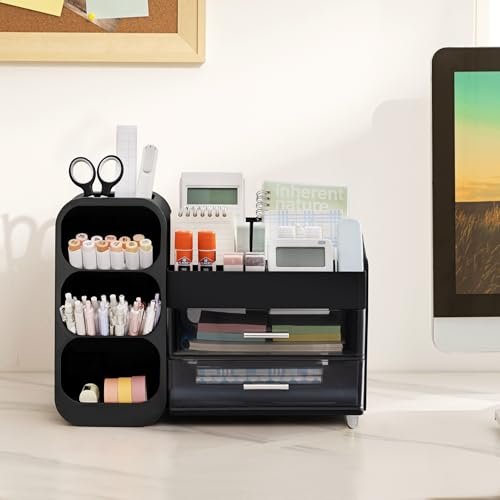
A modular desk organizer turns a crowded workspace into a cleaner, faster, and more useful daily work zone.
Loose pens, paper stacks, charging items, and small office tools can quickly take over a desk. A good organizer gives each item a clear place without forcing you to use bulky drawers or large cabinets. I reviewed five popular desktop organizers with different layouts, materials, and storage styles. These picks can suit a home office, classroom, craft area, or busy work desk.
See the differences between my top picks at a glance.
HBlife Desk Organizer with Drawers

The HBlife desk organizer takes a compact approach to daily desk storage. The supplied listing describes four compartments and two drawers, so it can hold pens, pencils, clips, notes, and other small items. This layout works well when small tools create most of the desk clutter. The black finish also gives it a simple look that can fit an office, home desk, school area, or craft table.
I like the mix of open and closed storage here. The open sections keep often-used tools in view, while the drawers can hide smaller items that look messy when left out. It is more suited to small office supplies than full-size files or folders. If you want a modular desk organizer for quick access and basic sorting, this is one of the easiest designs to understand.
Pros:
- Four compartments support simple daily sorting
- Two drawers hide small items and reduce visual clutter
- Compact design should suit many standard desks
- Useful for office, school, art, and craft supplies
- Open sections make pens and tools easy to reach
- Black color works with many desk styles
Cons:
- Not the best choice for large files or tall folders
- Small drawers may not fit bulky supplies
- The supplied listing does not state the exact material or dimensions
What Amazon Buyers Are Saying
Buyer feedback for compact desk organizers often focuses on size, ease of use, and whether the compartments match real desk needs. For this model, shoppers should read the current Amazon reviews and photos closely to confirm the scale before ordering. The most useful comments will likely involve drawer movement, stability, and how well the compartments hold the supplies shown in the listing.
As with any small desktop unit, expectations matter. Buyers who need pen storage and a place for small items may find this layout practical. Buyers who expect deep file storage may prefer one of the tiered organizers below. Check the latest listing details because seller information, price, and customer feedback can change.
My Recommendation
I recommend the HBlife model for users who want a small modular desk organizer for pens, clips, notes, and personal tools. It offers a useful balance of open access and hidden storage. I would not choose it as my main paper-file system. Overall, it is a practical pick for light desk clutter.
gianotter 4-Tier Mesh Desk Organizer

The gianotter organizer targets paper-heavy workspaces. Its listed design has four tiers, a drawer, and two pen holders. The tiered format lets you separate papers by task, status, or person. The metal mesh style also keeps the contents visible, which can help you spot documents before they become buried in a stack.
This model is a stronger match for an office desk than for a small student station that only needs pen cups. The upper levels can handle papers, while the drawer gives smaller items a separate home. The two pen holders add useful side storage without taking another item on the desk. Its vertical shape may save some surface area, but you still need enough height and depth around it for easy use.
Pros:
- Four tiers create clear paper categories
- Metal mesh design gives the organizer an office-ready look
- Drawer provides extra space for smaller desk supplies
- Two pen holders keep writing tools within reach
- Good fit for papers, forms, and active work files
- Vertical layout can reduce wide paper piles
Cons:
- More storage levels can make the unit feel tall on a small desk
- Open mesh shelves do not hide papers from view
- It may be more storage than a light user needs
What Amazon Buyers Are Saying
When reviewing mesh file organizers, Amazon buyers commonly pay attention to assembly, balance, tray access, and the space between levels. I suggest checking current buyer photos for a better sense of scale. Reviews that mention paper size, drawer use, and the fit of pens in the holders offer the most useful day-to-day information.
People who prefer visible paper sorting may value this design. Those who want a smooth, hidden look may find the open mesh less appealing. Be sure to review the latest customer comments for any notes about finish, stability, or parts before purchase.
My Recommendation
The gianotter is a solid option for a busy desk that needs paper sorting plus small-item storage. I would choose it for forms, active documents, and office tools rather than a minimalist desk. Its four-tier structure gives it strong practical value. It earns a high rating when file access matters more than a low profile.
WALI 4-Tier Desktop File Organizer

The WALI DO005DH-B is listed as a four-tier desktop paper organizer with a drawer and two pen holders. This design focuses on letter-size office papers and common desk accessories. The tier system can help separate new work, items in progress, reference papers, and finished documents. It gives a desk a clear workflow instead of one large paper pile.
I see this model as a practical middle ground. It has more paper capacity than a simple pen organizer, but it does not add the larger footprint of a full cabinet. The drawer can hold clips, sticky notes, or other small supplies. If you want a modular desk organizer that supports a daily paper routine, the WALI layout deserves attention.
Pros:
- Four tiers support a simple paper workflow
- Designed for desktop letter-paper organization
- Drawer adds closed storage for small office items
- Two pen holders keep writing tools separate
- Useful for home offices, classrooms, and shared work areas
- Vertical layout can make active papers easier to scan
Cons:
- It may not suit users who rarely handle paper
- Open trays leave documents visible
- Exact material and dimensions should be confirmed on the current listing
What Amazon Buyers Are Saying
For a paper tray organizer like this, buyer comments often help clarify whether the tiers feel sturdy, whether the drawer moves well, and whether standard papers sit neatly in place. I recommend reading the latest Amazon feedback before ordering. Customer images can also show how the organizer looks when it holds a normal working load.
The main appeal is clear separation. Buyers who use several paper categories may get more value from this unit than from a small desktop caddy. Users with a mostly digital workflow may not need four trays. Review the current listing for the latest details, since product information and buyer experiences can change over time.
My Recommendation
I recommend the WALI organizer for home offices, teachers, students, and anyone who handles several groups of letter paper. It gives you a useful mix of trays, a drawer, and pen holders. I would place it near the front of a desk where each level stays easy to reach. It is a strong value-focused modular desk organizer for paper tasks.
Gugsey 5-Tier Desk File Organizer
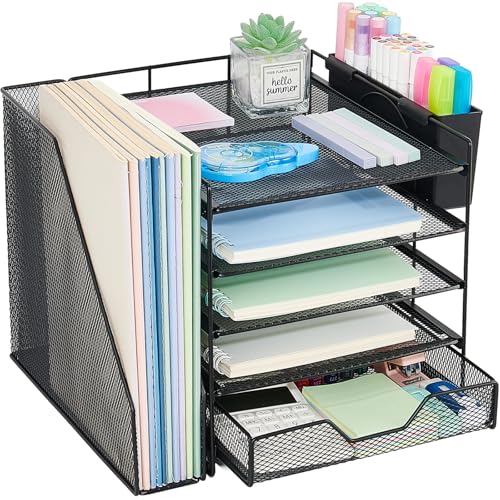
The Gugsey organizer adds a fifth tier for users with a larger paper workload. The supplied title lists a drawer and pen holder along with the five-tier file design. More levels can help separate papers by project, deadline, subject, or action. This makes the unit a good match for a desk where paper sorting affects the workday.
A five-tier design needs a clear spot on the desk. In return, it can reduce the need for several separate trays. I would use the lower levels for less urgent papers and the upper levels for documents that need fast access. This modular desk organizer is best for organized paper storage, not for hiding a large mix of random supplies.
Pros:
- Five tiers offer more paper categories than four-tier designs
- Drawer adds a place for small office supplies
- Pen holder keeps writing tools close to the paper area
- Useful for classrooms, offices, and home workspaces
- Can support project-based paper sorting
- May replace several loose paper trays on one desk
Cons:
- Five tiers may take more vertical space
- It can feel excessive for a light paper user
- The listing does not provide all product measurements in the supplied details
What Amazon Buyers Are Saying
When buyers assess a five-tier organizer, they usually care about capacity, balance, shelf access, and how easy it is to keep each level useful. I suggest checking current reviews for comments about setup and real desk size. Photos from buyers can help you judge whether the trays hold the paper types you plan to store.
The extra tier can be helpful when several projects share one desk. Still, more storage only helps when you assign a purpose to each level. Buyers who want a small, low-profile caddy may prefer the HBlife option. Always confirm current product details and feedback on Amazon before making a final choice.
My Recommendation
The Gugsey is my pick for users who need the most paper separation from this group. It makes sense for teachers, office workers, and busy home users with several active tasks. I would measure the intended desk space first because five levels need room. Overall, it offers strong organization value for paper-heavy work.
Samstar Mesh File Organizer

The Samstar takes a different approach from the tiered units above. Its listed layout includes three paper trays and two vertical upright sections. This gives you both horizontal storage for active papers and upright space for folders or larger documents. The mesh construction keeps the contents visible and gives the organizer a classic office supply look.
I find this layout useful for mixed paper needs. The trays can hold papers that need action, while the upright sections can hold folders, notebooks, or papers that need to stay vertical. It may work better than a standard file tray for users who handle several document shapes. As a modular desk organizer, it offers a balanced setup without adding a separate pen cup or drawer.
Pros:
- Three trays support horizontal paper sorting
- Two upright sections handle vertical folders or documents
- Mesh construction keeps stored items easy to see
- Mixed layout suits varied paper tasks
- Useful for offices, home desks, and shared work areas
- Can reduce the need for separate vertical and horizontal holders
Cons:
- No drawer is listed for hidden small-item storage
- It may not replace a pen holder for users with many writing tools
- Open mesh sections do not conceal desk papers
What Amazon Buyers Are Saying
For a mixed file organizer, the most useful buyer feedback covers tray depth, folder fit, balance, and access from the front. I recommend reading the current Amazon reviews and viewing customer images before buying. These details can show how the three trays and two upright sections work with a real paper load.
This format should appeal to people who want both tray and vertical storage in one unit. It may be less useful for someone who needs a drawer for clips or small items. Check the newest listing information for dimensions and material details, since those facts matter when you plan to place it beside a monitor or against a wall.
My Recommendation
I recommend Samstar for users who handle both loose papers and upright folders. Its mixed layout gives it more range than a simple tray stack. I would pair it with a small pen cup if writing tools are also a concern. It is a capable choice for flexible paper organization and earns a strong overall score.
How to Choose a Modular Desk Organizer
The best organizer depends on what you keep on your desk each day. A compact caddy can solve pen and clip clutter. A tiered file holder can improve paper flow. A mixed tray system can support folders, loose pages, and active projects. Before you buy, match the storage layout to your work habits rather than choosing only by appearance.
1. Match the Layout to Your Desk Items
Start by listing the items that cause the most clutter. If pens, scissors, clips, and sticky notes create the problem, choose open compartments and drawers. If papers create the mess, choose several trays or tiers. If you use both folders and loose pages, a mixed design like the Samstar may offer better value.
Think about access as well. Items used every hour should stay in an open section. Items used less often can go in a drawer or lower tray. This simple rule helps a modular desk organizer support your routine instead of becoming another place where items pile up.
2. Check Size, Tier Height, and Desk Clearance
Measure the space beside your monitor, keyboard, or laptop. Check the organizer’s width, depth, and height on the current Amazon listing. A five-tier unit may provide more paper storage, but it may also block part of a view or fit poorly beneath a shelf.
Also consider the paper you use. Letter sheets, folders, notebooks, and mail may need different storage space. Look for clear product measurements and current customer photos. Never assume that every paper holder fits every folder or notebook.
3. Compare Material, Stability, and Long-Term Value
Metal mesh organizers are often easy to see through and suit many office spaces. Plastic or mixed-material designs can offer a lighter look and may work well for small supplies. The material alone does not decide quality. Pay attention to the frame, tray shape, drawer movement, edges, and base stability.
Value also depends on how much storage you will use. A five-tier organizer is not a good deal if you need only one pen cup. A compact unit may be the better buy for a small desk. Read recent reviews, compare the features you need, and confirm the seller’s current product details before checkout.
Final Verdict: Which Should You Buy?
For paper-heavy work, I would choose the Gugsey five-tier model. For mixed folders and loose pages, Samstar is the most flexible. For small tools, HBlife is the best compact modular desk organizer.
Choose by layout first, then size and value. The right modular desk organizer can make daily work faster and keep your desk calm.
FAQs Of modular desk organizer
What is the best modular desk organizer for small supplies?
The HBlife model is the best fit here because it lists four compartments and two drawers for pens, clips, notes, and other small items.
Which modular desk organizer is best for lots of paper?
The Gugsey five-tier organizer offers the most listed levels in this comparison, so it suits users who sort several paper groups.
Are mesh desk organizers easy to keep organized?
Yes. Mesh designs keep items visible, which makes it easier to see papers and tools. They do not hide clutter, so regular sorting still matters.
Should I choose trays or upright sections for files?
Choose trays for loose papers and upright sections for folders or documents that need to stand. Samstar combines both layouts.
How do I know if a desk organizer will fit?
Measure the available width, depth, and height. Then compare those measurements with the current Amazon listing and buyer photos.